Advertisement
Space.Fan — Go Beyond
ApJ · 6 DAYS AGO
UniverseMODEL

Solving the Mystery of Gas Clouds Hiding Radio Bursts

By Space.Fan Editorial Desk

Scientists have found a new way to see through space interference to study mysterious radio signals coming from far away.
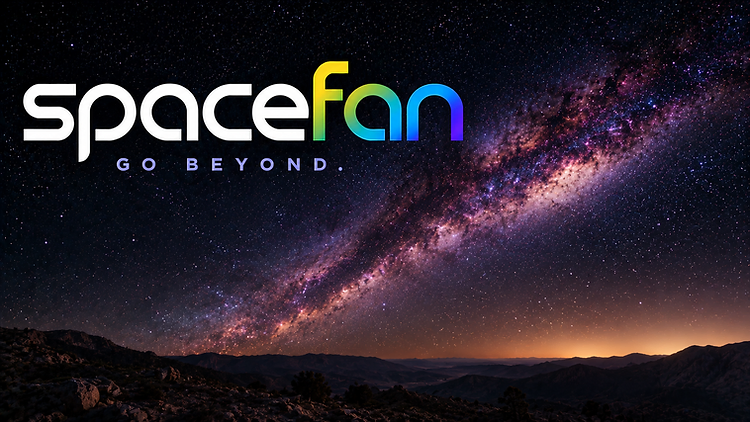
The Milky Way galaxy arching over mountains on Earth.
Image · Space.Fan

The Drop

Fast Radio Bursts (FRBs) are short, intense flashes of radio energy that travel across the universe. For years, scientists have hoped to use these flashes to study neutral hydrogen, a simple gas that fills space. When radio signals pass through this gas, they leave a tiny fingerprint called a 21-centimeter absorption line. However, capturing this fingerprint is very difficult because space is full of 'scintillation,' which acts like heat waves shimmering over a road, distorting the signal. A team of researchers built a computer model to study how this scintillation affects our ability to see the hydrogen signature. They discovered that when an FRB passes through a thin screen of space dust or gas, the signal gets jumbled. However, if the radio signal is strong enough and the interference happens at a different scale than the hydrogen fingerprint, it is possible to clean up the data using a filter. To prove their theory, the team looked at data from a repeating FRB source known as FRB 20180916B. They realized that the path this signal takes to reach Earth might pass through a cold, dense cloud of gas within our own Milky Way galaxy. By using large radio telescopes like the GBT or FAST, researchers believe they can finally isolate these signatures if they record enough bursts, specifically aiming for about 500 signals to be sure of what they are seeing.
Advertisement

Why It Matters

Neutral hydrogen is the main building block of s and galaxies. By using FRBs to detect this gas, astronomers get a 'shadow' image of the material floating between us and distant galaxies. This allows us to map out the hidden structure of the cosmos that does not glow on its own. This method acts like an X-ray of space. It helps researchers understand how matter is spread out across the universe, providing a new way to measure the invisible hydrogen that is usually impossible to detect directly over such vast distances.
Advertisement

The Catch

This research is currently based on computer models and predictions. While the math suggests that detecting the hydrogen line is possible, it remains a challenge to collect enough high-quality data from a single repeating FRB. We still need more observational proof from giant telescopes to confirm that these models work exactly as expected in the real, messy environment of space.

Put That in Perspective

Scientists have tracked these fast bursts for years, but the signals are often too quick to study in detail. Future observations using telescopes like the Green Bank Telescope (GBT) or the Five-hundred-meter Aperture Spherical Telescope (FAST) will be the next big step in testing this technique.

Source November 17, 2026
Om Gupta, Pawan Kumar, Paz Beniamini, Edward L. Robinson
University of Texas at Austin, The Open University of Israel, The George Washington University·The Astrophysical Journal·10.3847/1538-4357/aeb6a9

Keep Exploring Space