
The Day a Giant Space Telescope Fell Down
In 1988, a massive radio telescope in West Virginia collapsed suddenly, leaving behind only a pile of metal.
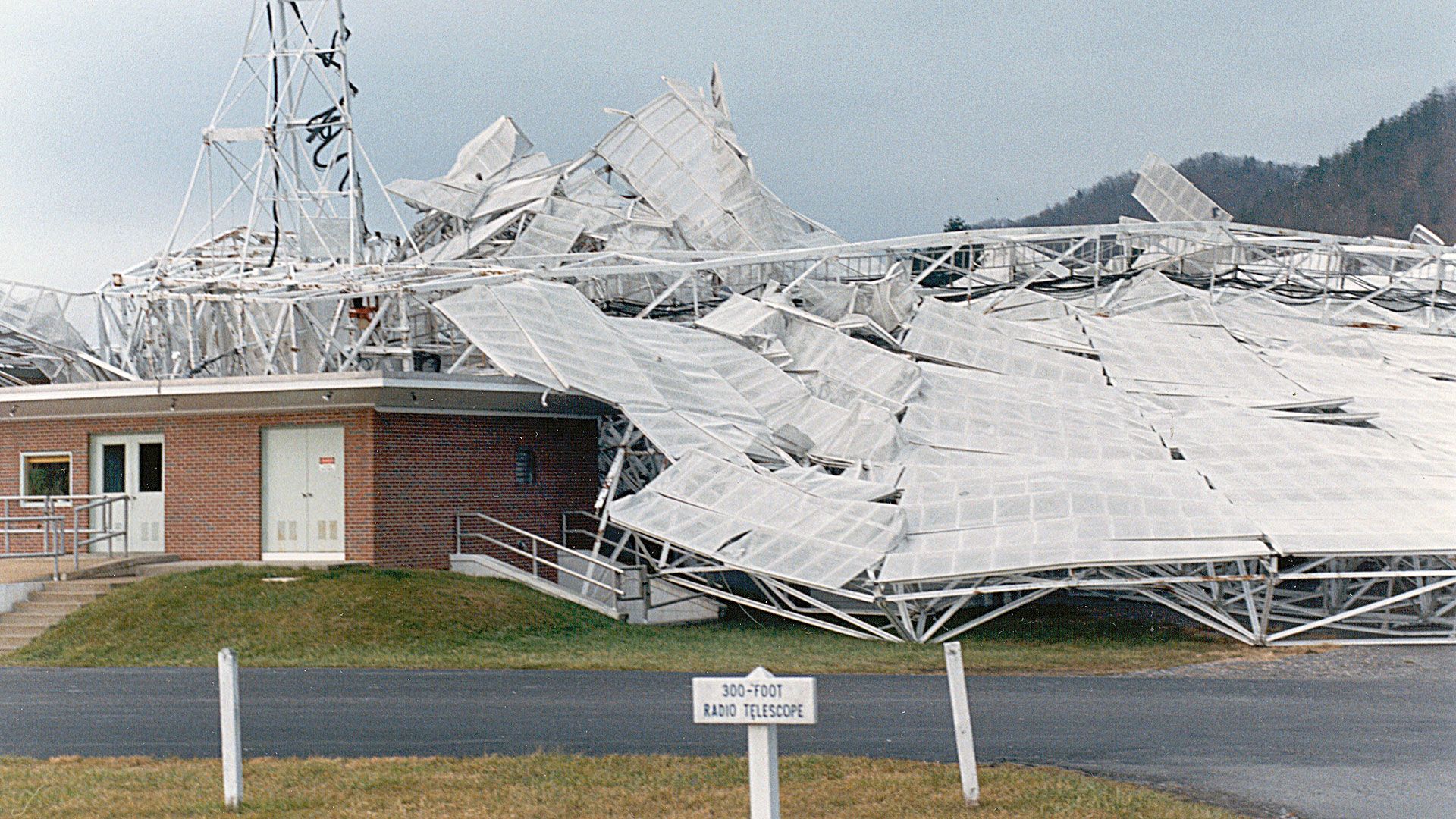
The Drop
Why It Matters
The Catch
Put That in Perspective
Today, modern telescopes are built with much stricter safety standards and computer models to test for these kinds of weaknesses. The site in Green Bank remains a legendary location in astronomy history, as it eventually became home to the even larger Robert C. Byrd Green Bank Telescope.
Keep Exploring Space

Fine-Tuning the Roman Telescope to Catch Exploding Stars
Scientists are preparing the upcoming Roman Space Telescope to precisely measure distant exploding stars, which act as cosmic rulers for the universe.


Voyager 1 Reaches a Historic Distance of One Light-Day From Earth
NASA celebrated the Voyager 1 spacecraft crossing a massive milestone as it travels through the far reaches of our solar system.


Moon Craters Are Shallower in Its Darkest Corners
New high-resolution images show that small craters in the Moon's cold, shadowed regions are shaped differently than those in sunny areas.


Protecting Worlds: How We Keep Space Clean
As space travel grows, scientists are updating rules to keep our planet safe and protect other worlds from Earth's hitchhiking germs.