Advertisement
Space.Fan — Go Beyond
UniversePEER REVIEWED

Updating the Hubble Sequence: How Early Galaxies Grew Up

By Space.Fan Editorial Desk

New data from modern telescopes shows that galaxies were far more organized and mature early in the universe's history than we once believed.
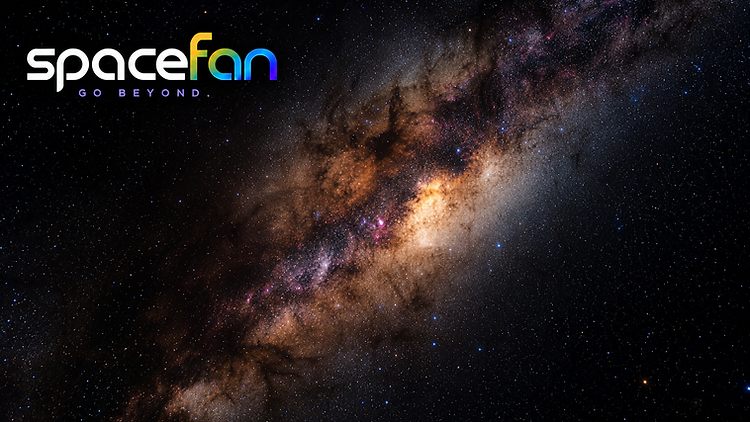
Dense star fields and glowing dust clouds across the center of the Milky Way galaxy.
Image · Space.Fan

The Drop

For a long time, astronomers used a system called the Hubble sequence to sort galaxies by their shapes. Think of it like a family photo album for space, showing how galaxies grew from messy, clumpy blobs into beautiful, organized spirals like our own Milky Way. This system worked well for the galaxies close to us, but it was built based on the tools we had decades ago. Recently, our view of the deep universe has changed completely thanks to advanced observatories like the James Webb Space Telescope and ALMA. These tools act like powerful time machines, letting us peer deep into the past. Instead of just seeing shapeless blobs in the early universe, researchers are finding galaxies that look surprisingly mature and well-structured, even when they were very young. The new study suggests that the old rules about how galaxies form and change shape might be too simple. It shows that galaxies were doing complex things like gathering gas and creating new s much faster than our older models expected. This is not just about how they look; it is about the physics of how a galaxy builds itself over billions of years.
Advertisement

Why It Matters

Understanding how galaxies grow is a major piece of the puzzle for how the universe became what we see today. By seeing that mature galaxies existed early on, researchers must now rethink the speed at which s form and how galaxies handle the gas that feeds them. This discovery shows that the 'childhood' phase of a galaxy might be much shorter than we thought, challenging the previous timeline of cosmic evolution.
Advertisement

The Catch

While these observations are exciting, they are based on a limited number of distant galaxies captured by our current telescopes. It is possible that we are only seeing the brightest or most unusual galaxies in the early universe, which might not represent how all galaxies grew up. More observations are needed to confirm if these mature structures are the rule or the exception.

Put That in Perspective

A century has passed since Edwin Hubble first created his classification system. While his work remains a foundation for astronomy, the new generation of space telescopes is allowing scientists to update his map of the universe to include the very first chapters of cosmic history.

Source September 28, 2026
Sandro Tacchella
University of Cambridge·Nature Astronomy·10.1038/s41550-026-02989-1

Keep Exploring Space