
Webb Telescope Finds Clues About the Universe's Very First Stars
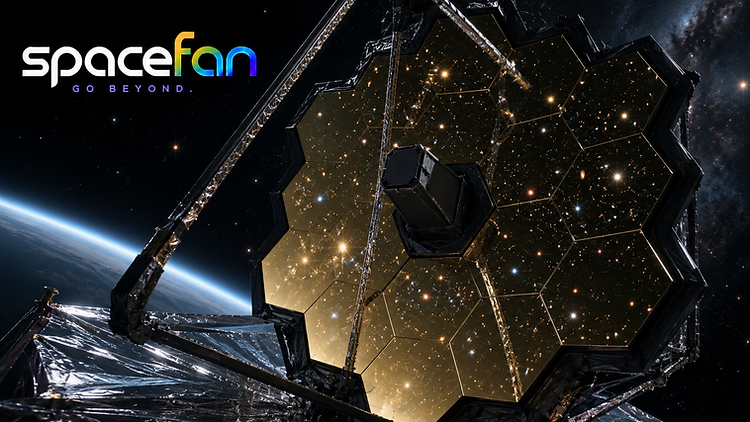
Astronomers have discovered a group of young, metal-poor galaxies that may hold the chemical fingerprints of the universe's first stars.
The Drop
Why It Matters
The Catch
Put That in Perspective
In the past, finding signs of the first stars was nearly impossible because they were too far away and too faint. Now, with the advanced technology of the James Webb Space Telescope, researchers are starting to peel back the layers of the early universe. The next goal is to find even more of these 'primitive' galaxy groups to see if this pattern is common throughout the history of our universe.
Keep Exploring Space

How Newborn Neutron Stars Launch Massive Space Jets
Super-powered magnetic stars may launch the fastest beams in the universe right after they are born.

New Software Makes Space Simulations Faster and More Powerful
Researchers created a faster way for supercomputers to map how light helped shape the early universe.

Tiny Storms Keep a Young Star Glowing in Radio Light
Scientists found that constant, miniature star flares are likely what power the steady radio glow of the active star AU Mic.

A New Look at the Glowing Shrimp Nebula
Astronomers have captured a stunning view of Sh2-188, a cosmic cloud that looks surprisingly like a shrimp swimming through space.